 Cyber
Techno vs House: How to Hear and Mix the Difference
Can't tell techno from house on the dancefloor? Learn the listening cues in rhythm, sound and mood, where tech house and deep house sit, and how each genre changes the way you mix and produce.
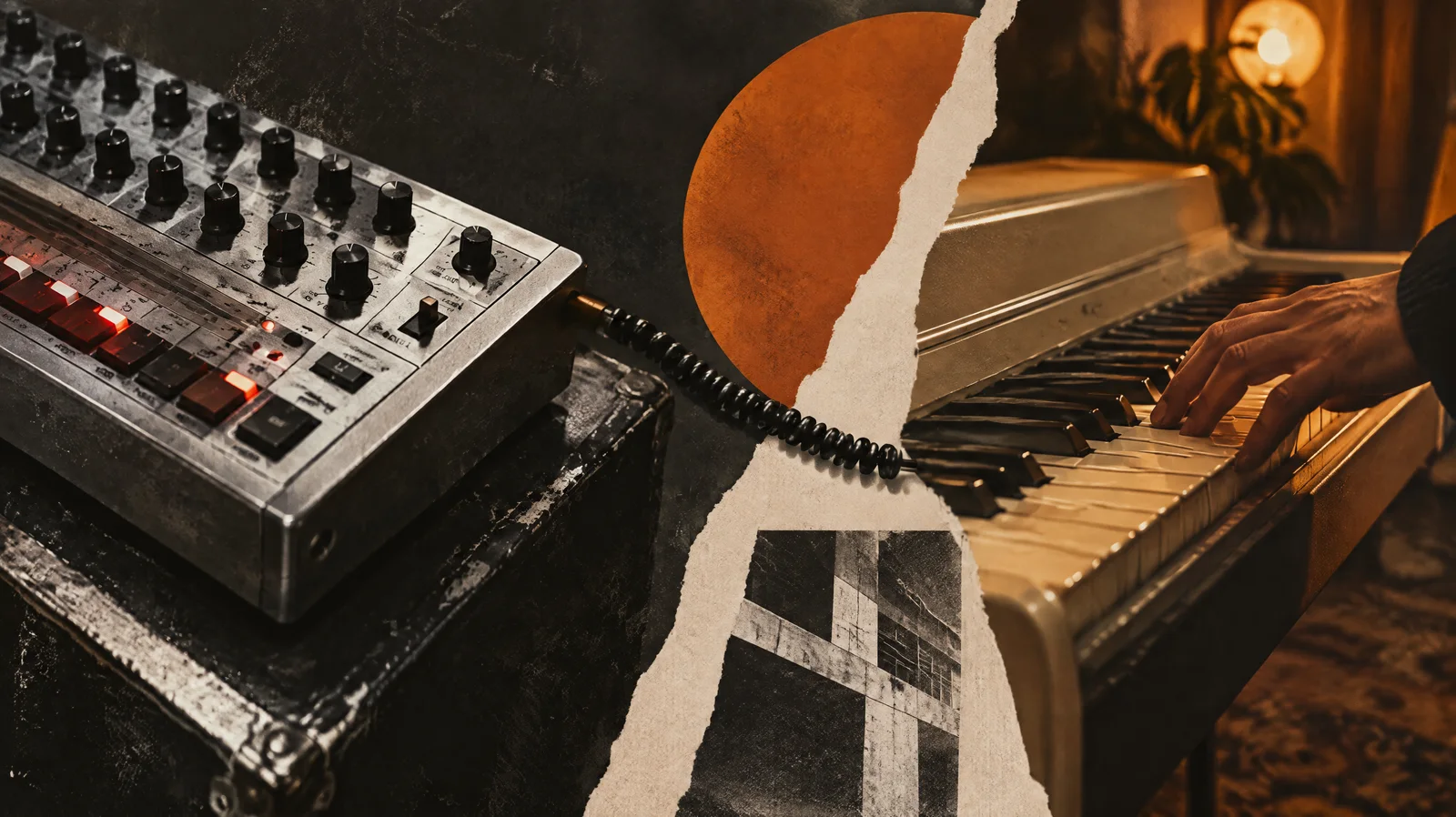
The techno vs house question usually comes up when a DJ slides from one into the other and the room changes mood without anyone being able to say exactly why. Both genres use a steady four-on-the-floor kick drum, both run long, and both are built for dancing. The difference sits in what happens around that kick. Listen to how the hi-hats move, what the bassline does, whether there are chords and vocals, and how the track makes you feel after ten minutes.
Techno vs house: the short answer
House is built around groove and feeling. It tends to swing. It often carries chords from pianos, organs or synths, and it welcomes vocals, frequently with a soul, gospel or disco flavour. Techno is built around repetition, texture and momentum. It is more machine-like, uses less harmony, and gets its tension from small changes in sound over long stretches.
Both grew out of 1980s American club culture, house in Chicago and techno in Detroit, and both have since split into many styles. That is why any techno vs house comparison describes tendencies rather than hard rules. Plenty of tracks sit right on the border.
| Aspect | House (typical tendency) | Techno (typical tendency) |
|---|---|---|
| Groove | Swung, bouncy, offbeat open hi-hats | Straight, driving, rolling percussion |
| Bassline | Melodic, rubbery, moves with the chords | Rolling or locked to the kick, sometimes a low rumble |
| Harmony | Chord progressions, stabs, piano and organ | Sparse: single notes, drones, filtered stabs |
| Vocals | Common: hooks, full verses, soulful samples | Rare: spoken words, chopped fragments |
| Mood | Warm, uplifting, social | Hypnotic, darker, more introspective |
| Tempo | Often high 110s to high 120s BPM | Often mid 120s into the 130s and beyond |
| Arrangement | Clear sections, breakdowns with chords or vocals | Gradual layering, long tension, subtle shifts |
| Mixing feel | Shorter, key-aware blends around vocals | Long, layered blends that build texture |
How do house and techno rhythms differ?
The quickest way to tell them apart is usually the hi-hat. In a lot of house, an open hi-hat lands on the offbeat (the “and” between kicks), which gives that familiar “boom-tss, boom-tss” bounce. Many house tracks also add swing, which nudges some notes slightly late so the groove feels human and loose. Claps or snares typically land on beats two and four. Extra percussion such as shakers, congas or tambourines fills the gaps.
Techno often keeps the hats straighter and busier, with steady sixteenth notes or closed hats ticking away like a machine. Instead of swing, it builds interest in a few ways:
- percussion loops of different lengths that drift against each other
- metallic hits
- rumbling low end
The effect is less “bounce” and more “drive”.
The bassline backs this up. House basslines tend to move with the chords and leave space between notes, which makes them feel funky. Techno basslines are more likely to repeat a short pattern, roll in steady sixteenths, or merge with the kick into one heavy low-end pulse.
Listening cue: tap your foot to the kick, then pay attention to your shoulders. If they want to bounce side to side, you are probably in house territory. If your whole body wants to lock into a forward push, it is probably techno.
Sound design and mood
House draws heavily on musical, organic-sounding sources. Typical ingredients are piano chords, organ stabs, disco string samples, warm analogue-style synths and sung vocals. Even its electronic sounds tend to feel friendly. The result is music that feels social and often joyful, made for a crowd singing along to a hook.
Techno leans on drum-machine percussion, synthesised tones, distortion, filtering and space effects like reverb and delay. Rather than writing a chord progression, a techno producer might take a single stab or noise and slowly open a filter over two minutes. The mood is usually darker and more hypnotic. Melodic techno shows that techno can be emotional and big-sounding too.
Dub techno is a good example of how blurry the lines get. It keeps techno’s minimal 4/4 structure but drenches chords in echo and reverb, often at slower tempos that overlap with house. Fans of deep house frequently enjoy it, and some artists move between both scenes.
A useful rule of thumb for telling the two genres apart: house tends to tell you how to feel through chords and vocals. Techno tends to put you in a state and leave the feeling to you.
Is techno faster than house?
Usually, but tempo is the least reliable way to separate them. A lot of house sits somewhere around the high 110s to high 120s BPM. A lot of techno runs from the mid 120s into the 130s, and hard techno can go well beyond that. However, dub techno and some minimal styles sit at house tempos, and plenty of tech house runs at the same speed as techno.
So if two tracks both read 126 BPM, the readout tells you nothing about genre. Three things tell you more:
- how busy the percussion is
- whether there is swing
- whether the track is carried by harmony or by texture
Treat BPM as a hint for mixing, not as a way to define either genre.
Perceived speed also matters. A sparse techno track at 128 can feel slower than a swung house track at 124 with busy shakers. Your ear reacts to how many events happen per bar, not just the kick rate.
Where tech house, deep house and other hybrids fit
Between the two genres sits a spectrum of styles, which is why tags on shops and streaming sites often overlap. Here are the ones you will meet most:
- Deep house: the mellow end of house. Jazzy or soulful chords, soft pads, relaxed vocals and rounded bass. Good for warm-ups, bars and late-night listening.
- Tech house: house swing and bass grooves combined with techno’s stripped-back percussion and punchier sound design. It is bouncy and rhythmic, and often built around a short vocal hook. A natural bridge between the two genres in a set.
- Minimal: very sparse, detail-focused music that can lean towards either side. Small clicks and percussive shifts do the work instead of big melodies.
- Melodic techno: techno rhythm and darkness with emotional synth lines and big breakdowns. Sometimes overlaps with progressive house.
- Progressive house: long builds, layered melodies and a smooth, evolving arc.
You will also see “EDM” used, especially in the US, as a catch-all for electronic dance music. It is used most for festival main-stage sounds with huge builds and drops. That is a separate world from most club house and techno, even if it borrows from both. If you want to see how these styles sit next to trance, drum and bass and others, the genre directory is a handy map.
Mixing house and techno as a DJ
DJs often notice the difference between techno and house most when they try to blend tracks. House is more melodic, so key clashes are more obvious. Two chord progressions in unrelated keys can sound sour within a couple of bars. Vocals add another constraint, since two vocals on top of each other rarely work. As a result, house mixes tend to be shorter and more carefully timed around phrases.
Techno has less harmony and long percussive intros and outros. That lets you run two tracks together for minutes and build a third texture from both. The challenge shifts to managing the low end, because two rumbling basslines can turn to mud fast.
Practical steps for each genre
- Count phrases. Both genres mostly work in 8, 16 and 32-bar blocks. Start your incoming track at the top of a phrase so changes land where the crowd expects them.
- Check keys on house. Use key tags to pick compatible tracks, and avoid layering two vocal sections.
- Swap the bass, don’t stack it. In techno especially, cut the low EQ on the incoming track. Then swap the basslines in one clean move at a phrase change.
- Use long blends in techno. Bring percussion in early, then introduce mids and highs gradually.
- Cross genres with a bridge. Moving from house to techno works best through a tech house or percussive track. Nudge the tempo up a little at a time rather than jumping.
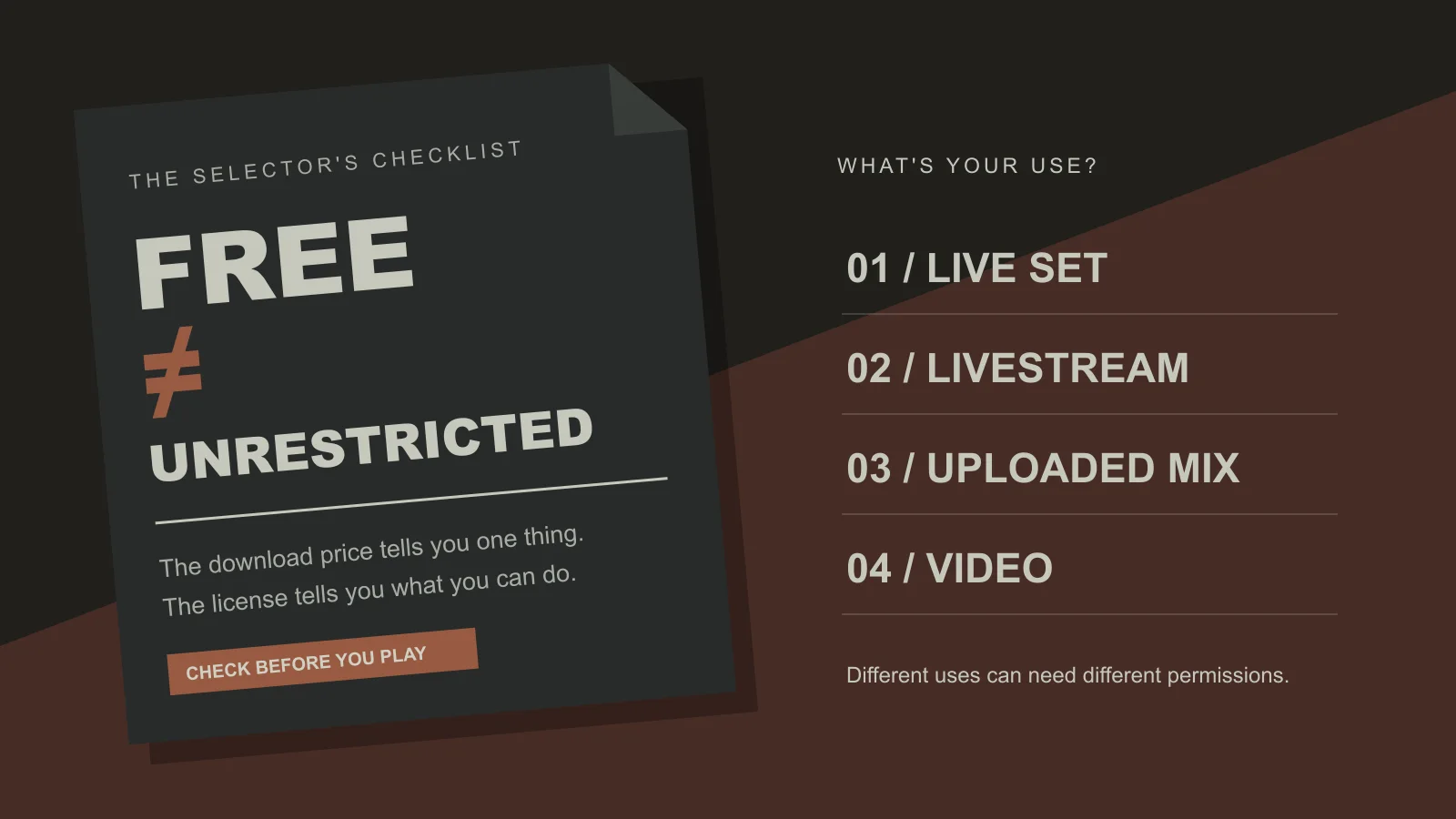
Practice material helps. CyberDJ’s library of original free DJ music includes house and techno. Every track is tagged with BPM and key, which makes it easy to pick pairs to rehearse with. You can stream or download MP3s for listening and DJ sets. Redistribution, resale and re-uploading are not allowed, and the licensing page explains the details.
If you are choosing software, Doof is CyberDJ’s DJ software, free to use with optional paid AI workflows. Installers are not yet published, so check the product page for updates.
Producing house or techno: what changes in the DAW
If you make music, the choice between the two genres changes where you spend your time.
- House production often starts with chords, a bassline that answers them, and a groove with swing applied to the hats and percussion. Sampling and vocal editing are common.
- Techno production often starts with one strong sound and a rhythm. It then relies on automation, filtering, distortion and effects to keep that sound evolving across a long arrangement.
Here is the same kick under two hi-hat approaches, written as a 16-step grid (x = hit, . = rest):
Step:        1 . . . 2 . . . 3 . . . 4 . . .
Kick:        x . . . x . . . x . . . x . . .
House hats:  . . x . . . x . . . x . . . x .   (offbeat open hat, add swing)
Techno hats: x x x x x x x x x x x x x x x x   (straight 16ths, vary velocity)
Clap:        . . . . x . . . . . . . x . . .
Program both in any DAW and you will hear the genres split immediately, even before adding bass. If you are new to production software, start with what a DAW is and how it works. CyberDJ’s own DAW, Siren, is free to use with optional paid AI tools for song and sound-effects generation. Installers are not published yet.
A trade-off worth knowing: house exposes weak harmony and vocal production, while techno exposes weak sound design and dull arrangements. Neither is the “easy” genre. Pick the one whose skills you want to develop.
How to train your ear: a worked example and common mistakes
Try this short exercise. Browse the library and pick one house track and one techno track with BPM tags within a few beats of each other. Listen to 60 seconds of each and note:
- Where the hi-hats land, and whether they swing.
- Whether you can hum a chord progression or only a rhythm.
- What the bassline does: move with chords, roll, or rumble.
- Whether vocals appear, and how complete they are.
- How you would describe the mood in one word.
Then play them back to back. Because the tempos match, any difference you hear comes from groove, sound and arrangement, which is exactly what separates the two genres. Repeat with tech house and deep house to fill in the middle of the spectrum.
Mistakes people make
- Judging by BPM alone. Tempos overlap heavily, so groove is a better guide.
- Calling all electronic music “techno”. Many people do this, but it confuses conversations with DJs and record shops.
- Assuming dark means techno. Plenty of house is moody, and melodic techno can be euphoric.
- Ignoring hybrids. Forcing every tech house track into one box leads to awkward set planning.
- Clashing vocals and busy loops. Layering a full house vocal over dense techno percussion usually sounds cluttered.
Once you can hear these cues, the choice between house and techno stops being a debate about which is better. It becomes a tool for knowing which sound suits the room, the hour and the mood. For more practical guides on mixing and genres, see the DJ guides.
Frequently asked questions
Is techno faster than house?
Often, but not always. House commonly sits somewhere around the high 110s to high 120s BPM. A lot of techno runs from the mid 120s into the 130s, and hard techno goes higher. Slower styles like dub techno can sit at house tempos. Tempo is a tendency, not a definition. The groove, sound palette and mood tell you more than the BPM readout.
What is techno called now?
It is still called techno. What has changed is the number of labels attached to it. You will see melodic techno, hard techno, peak-time techno, minimal, dub techno and industrial techno, among others. These describe flavours within the genre rather than replacing it. Some mainstream listeners also use 'techno' loosely for any electronic dance music, which is a common source of confusion.
What's the difference between deep house and tech house?
Deep house is mellower and more musical. It uses warm, jazzy or soulful chords, soft pads, relaxed vocals and a rounded bassline. Tech house borrows techno's stripped-back percussion and punchier sound design while keeping house's swing. That gives it a bouncy, groove-heavy feel built for busy dancefloors. In a set, deep house tends to suit warm-up slots and tech house tends to suit the middle of the night.
What's the hardest EDM genre to make?
There is no single answer, because each genre is hard in a different way. Genres with dense sound design and tight mixdowns, like drum and bass or heavy bass music, demand technical precision. Minimal techno and deep house look simple, but they are difficult because sparse arrangements expose every weak sound and every dull transition. The hardest genre is usually the one whose fundamentals you have not practised yet.
Is EDM the same as house or techno?
Not exactly. EDM is a broad umbrella term, especially in the US, for electronic dance music in general. It is often used for big festival main-stage styles with large builds and drops. House and techno are specific genres with their own grooves and club histories. A main-stage EDM track might borrow house elements, but most techno and house DJs would not describe their music as EDM.